Why Every Classroom Needs a Sensory Balance Ball: A Simple Tool for Focus, Calm, and Movement
If one walks into any primary class room or therapy room in Australia, one would observe that there are children who require movement on a regular basis during the course of a school day. Movement is natural, and regular input of sensory information may assist certain children in becoming more regulated and attentive. That is precisely why the use of a simple yet economical tool such as the sensory balance ball fits the bill in this case.
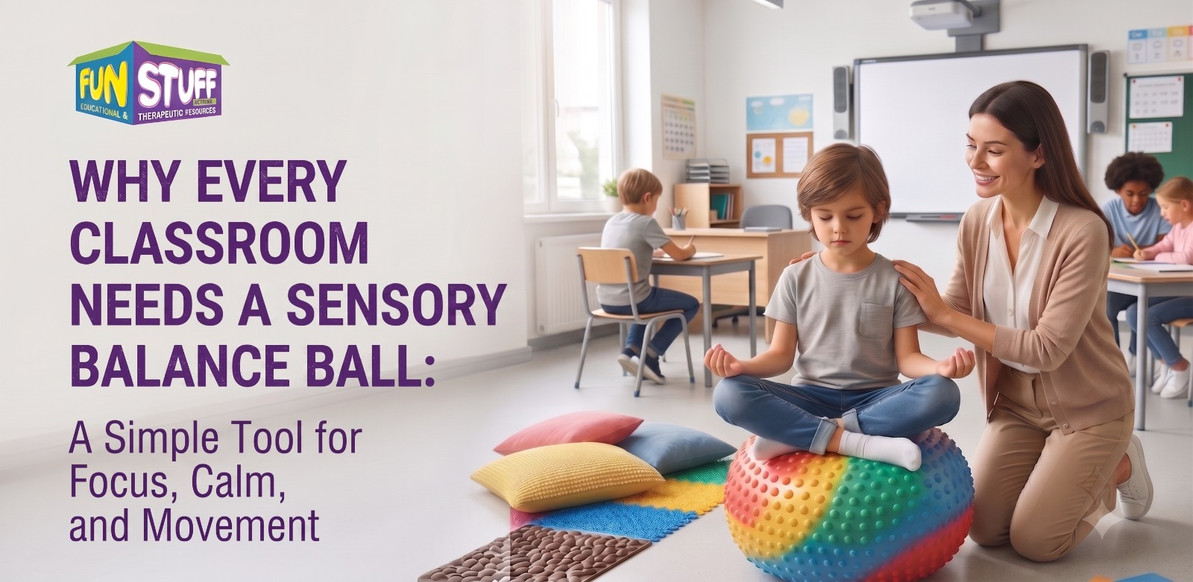
At Fun Stuff Educational & Therapeutic Resources, we stock two versions of this classroom favourite the Spikey Sensory Massage Ball – Yellow and the Sensory Massage Balance Yoga Ball – Textured (Yellow). Both are half balance balls essentially a rounded, textured dome that a child (or adult) stands on to build balance, work through excess energy, and get grounding sensory feedback through the soles of the feet. Because they serve almost identical purposes, we're covering both together in this guide, along with the research behind why they work so well in schools and therapy settings.
What Exactly Is a Sensory Balance Ball?
Contrary to their name, these sensory tools are not squeezable balls in your hands. They are half-domes shaped like balance balls with one flattened side meant to be used for standing, sitting, or placing feet upon. They have a padded bumpy texture meant to give sensory feedback to the soles of the feet while also being somewhat flexible and able to wobble.
Features of the Spikey Sensory Massage Ball and the Textured Sensory Massage Balance Yoga Ball include the following:
- Good for all age groups ranging from preschool children up through teenagers and adults.
- Easy to maintain and clean.
- Compact enough to store in a classroom corner, sensory box, or therapy cupboard.
- Versatile use standing, sitting, or even as a hand and foot massage tool.
Both offer good sensory feedback along with balance training, but they have different sensations. It usually depends on the child’s sensory preference.
The Research Behind Balance Tools in Learning Environments
Balance and wobble style tools aren't just a passing trend in classrooms; they're grounded in decades of occupational therapy and sensory integration research. Two sensory systems are directly targeted every time a child steps onto one of these balls:
- Vestibular system: This system lies within the inner ear and is responsible for our ability to perceive our sense of balance, where our head is at all times, and how we move through space. Slow, repetitive wobbling engages the vestibular system in a process known as “regulation,” whereby an overly active nervous system is calmed and an understimulated one is aroused, depending on the speed of movement.
- Proprioceptive system: This system allows us to feel what our body position in space is, based on muscle and joint input. By standing on an unsteady, tactile surface, the postural muscles in the feet, ankles, and core must make constant minute adjustments to maintain their balance.
Short periods of vestibular and proprioceptive stimulation lasting only for several minutes are often prescribed to children with ADHD, autism, or sensory processing difficulties by occupational therapists as a part of their "sensory diet." This practice aims not to exhaust kids but to provide them with exactly the type of input their nervous system needs so that it can calm down and become ready for further work in a seated position.
However, many teachers have found out that movement strategies can aid in creating calm transitions as well as helping some of the children to focus again before continuing with studying.
Classroom Uses for Teachers
You don't need a dedicated sensory room to make use of a balance ball. Some simple, low prep ways teachers are using them:
- Brain Break Stations : Have the ball set at one corner of the class during brain break activities or calm corners. The child who is fidgeting can spend two minutes balancing himself on the ball prior to joining his class again.
- Reading/Listening Aid : There are certain children who have trouble focusing because they need something done by their feet. Allowing such a child to balance himself on the ball while listening to an instruction or story is far better than fighting against the fidgetiness.
- Transition tool: Movement between activities lining up, packing away, and coming back from recess are common flashpoints for dysregulation. A quick 60 second balance challenge can help reset the group before moving into focused work.
- Whole class energizer: Even without special needs in mind, a quick balance challenge (who can stand the longest, eyes closed balance, etc.) is a fun way to burn energy on a wet weather day when outdoor play isn't possible.
- Sole massage and grounding: Simply sitting and rolling bare or socked feet over the textured surface can be calming for anxious students before a test or transition, offering tactile input without needing to stand and balance.
Therapy Uses for Speech Therapists and OTs
For speech language pathologists and occupational therapists, these balance balls are a genuinely versatile addition to the therapy tool kit not just for gross motor goals, but for combining movement with language and attention work.
- Movement breaks between drills : Attention and engagement dip fast during repetitive articulation or language drills, especially with younger clients. A 30–60 second balance break between sets can reset focus without losing session momentum.
- Combining movement with language targets : Ask a "wh" question, request a sentence, or practise a target sound each time the child balances or steps on and off the ball. Many therapists combine movement with language activities to help maintain engagement during therapy sessions while working towards communication goals.
- Regulation before sessions. For clients who arrive dysregulated and overstimulated after a busy classroom or under aroused and sleepy, a few minutes on the ball at the start of a session can help settle the nervous system into a state that's ready to engage with therapy tasks.
- Foot desensitization and tolerance to touch. For children who are tactilely defensive of their feet (as seen with people having sensory issues), an introduction to this textured tool via wearing socks and then without would be beneficial.
- Ball for the waiting room or sensory corner. The inexpensive, washable, and maintenance-free aspect of these balls makes them perfect tools for use in the waiting room or sensory corner of clinics, since numerous patients would get the opportunity to use one tool all day long.
Reasons Why Schools and Clinics Opt for Them Instead of Other Costlier Tools:
The wobble boards and balance discs are great tools indeed; however, they are costlier and occupy much storage space. With the half ball shape of the Textured Sensory Massage Balance Yoga Ball and Spikey Sensory Massage Ball comes a really good option:
- Budget friendly for schools ordering multiples across several classrooms.
- Compact enough to fit in a therapy bag, sensory box, or classroom shelf.
- Low learning curve, no assembly, no instructions needed, safe for independent use with light supervision.
- Dual purpose works equally well as a standing balance tool or a seated foot/hand massage tool.
For schools building out multiple sensory corners or speech therapists who see a high volume of clients across a week, having a handful of these on hand (rather than one expensive board) means more students can access sensory input at the same time.
Deciding Between the Two
Since both are fulfilling the same primary function, the decision usually depends on personal sensory preference:
- The Spikey Sensory Massage Ball has a firmer, more textured "durian shape" surface, ideal for children who seek out stronger tactile and proprioceptive input.
- The Sensory Massage Balance Yoga Ball – Textured offers a slightly gentler textured surface, a good starting point for children who are more sensitive to sensory input or newer to standing balance work.
It may be beneficial for schools and clinics to purchase both in order to have an option depending on the needs of the particular child each day.
Setting Up a Sensory Corner: A Practical Starting Point
For teachers and clinicians who are new to sensory based regulation tools, it can help to have a simple structure rather than introducing equipment ad hoc. A basic sensory corner built around a balance ball might include:
- A clear visual boundary, a mat, rug, or taped off square so students understand where the "movement zone" is.
- A simple instruction card or visual schedule, for example, "Stand for 1 minute, then return to your seat," so the tool doesn't become an open ended distraction.
- A timer visual or auditory, so students (and staff) can self manage how long they use the space.
- A rotation system if multiple students need access, a simple signup sheet or turn taking token works well in a busy classroom.
This kind of light structure means the tool remains purposeful rather than becoming "just another toy" in the room, and it also makes it easier to track which students are using regulation strategies and how often, which is useful data for IEP reviews or discussions with parents and allied health professionals.
A Note for Speech Pathologists Building a Movement Language Routine
Speech language pathologists working with young or highly active clients often find that language gains happen faster once the body's movement needs are addressed first. Rather than treating the balance ball as a separate "reward" activity bolted onto the end of a session, some therapists build it directly into the session structure, for example, alternating 3–4 minutes of structured language drills with 30–60 seconds on the ball, repeated across the session. This keeps the nervous system regulated throughout, rather than letting attention build up and then collapse. Over time, many clinicians find they need fewer, shorter movement breaks as a child's tolerance for seated work improves, a useful marker of progress to note in session data.
Conclusion
The use of sensory balance balls is an inexpensive but worthwhile option that can help in regulating the class and making therapy sessions more interesting. All the tool needs is a bit of space on the floor, and there is no need for any maintenance costs and batteries at all. For many classroom and therapy situations, the balls may become a viable tool for promoting motion, regulation, and participation.
Check out our Sensory & Fidgets category for all sorts of sensory tools and fidgets.
Both products are available from Fun Stuff Educational & Therapeutic Resources: the Spikey Sensory Massage Ball – Yellow and the Sensory Massage Balance Yoga Ball – Textured (Yellow). Fun Stuff also provides dedicated school ordering and NDIS ordering options where applicable.
Recent Posts
-
How Shared Play Builds Language Skills in Children
Children learn language through real interactions. A child may pick up a new word from a book, but t …12th Oct 2026 -
Word Finding Difficulties in Children: Signs, Strategies and Activities
A child with word finding difficulties knows a word but can't get to it when they need it. They migh …9th Oct 2026 -
School Readiness in Australia: What to Know
Every year, sometime in late January, prep teachers all over Australia meet their new class for the …15th Sep 2026